Built for the working world
Hardwearing labels for equipment that earns its keep. Custom die-cut polycarbonate, direct-to-surface printing and industrial adhesive options, with every detail shaped around the job.
Limerick · Ireland · Europe
Your equipment works hard. Its labels should too.
From a machine nameplate to a control enclosure, an industrial label carries information people need to see, use and trust. Polycarbonate brings a substantial, professional finish to that everyday task.
Often specified as Lexan, polycarbonate can be printed and die cut to create durable equipment labels, branded badges and graphic overlays. Material grade, print system and adhesive are selected together to suit the application.
Made for handling
A tough polycarbonate face helps labels stand up to everyday handling and wear. Select the material thickness and finish to suit the equipment and its working environment.
Reverse printed, protected within
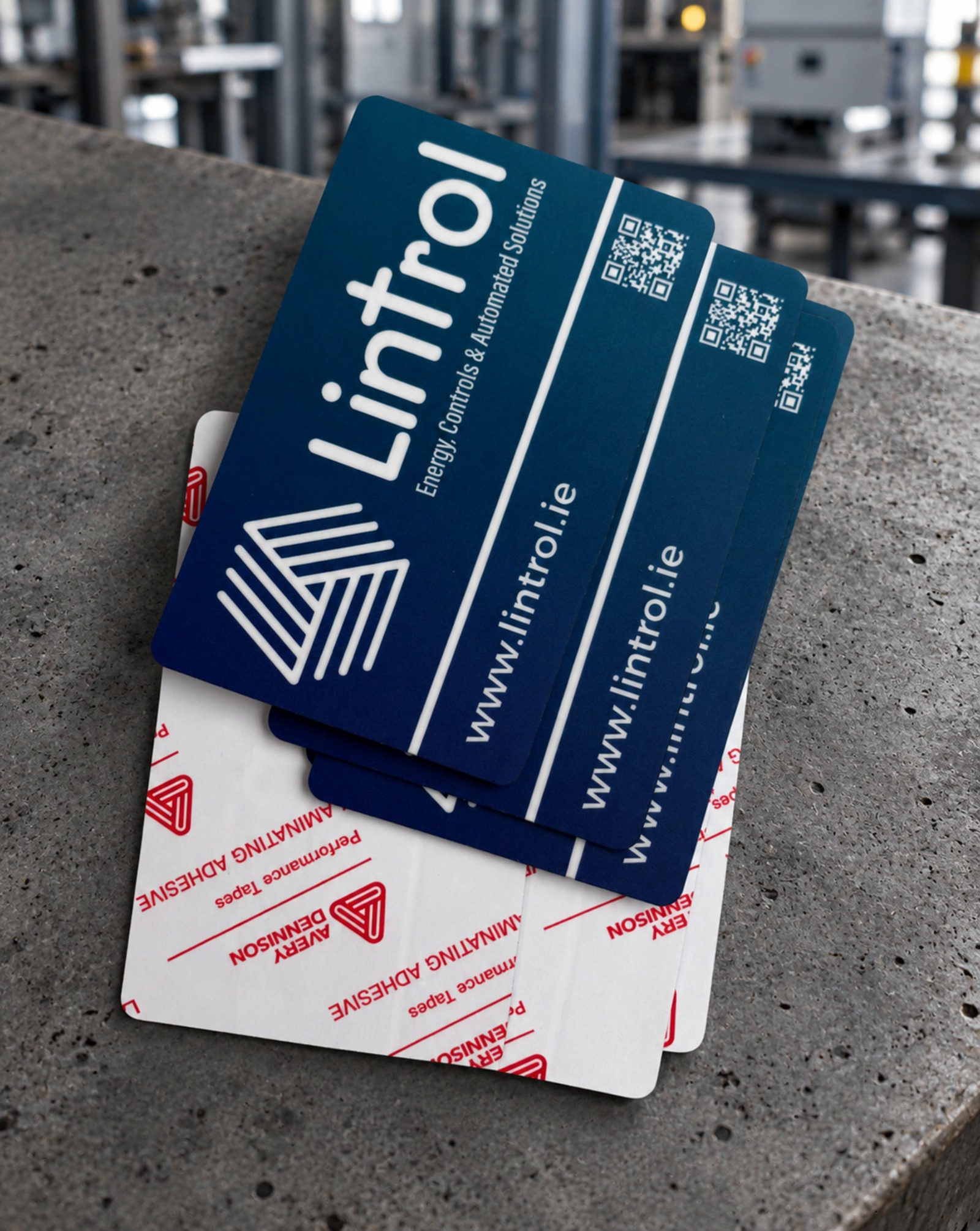
Graphics are reverse printed directly onto the rear surface of the clear polycarbonate. The print is then sandwiched between the material and the industrial adhesive, protecting logos, text and identification details beneath the durable face.
A fit with purpose
Custom die cutting creates consistent outlines, neat rounded corners and application-specific shapes. A carefully fitted label looks like part of the product from day one.
Quality you can see. Detail you can feel.
Print definition, material texture, finished edges and adhesive backing, shown on work produced in our own workshop.
A durable label starts with the right adhesive
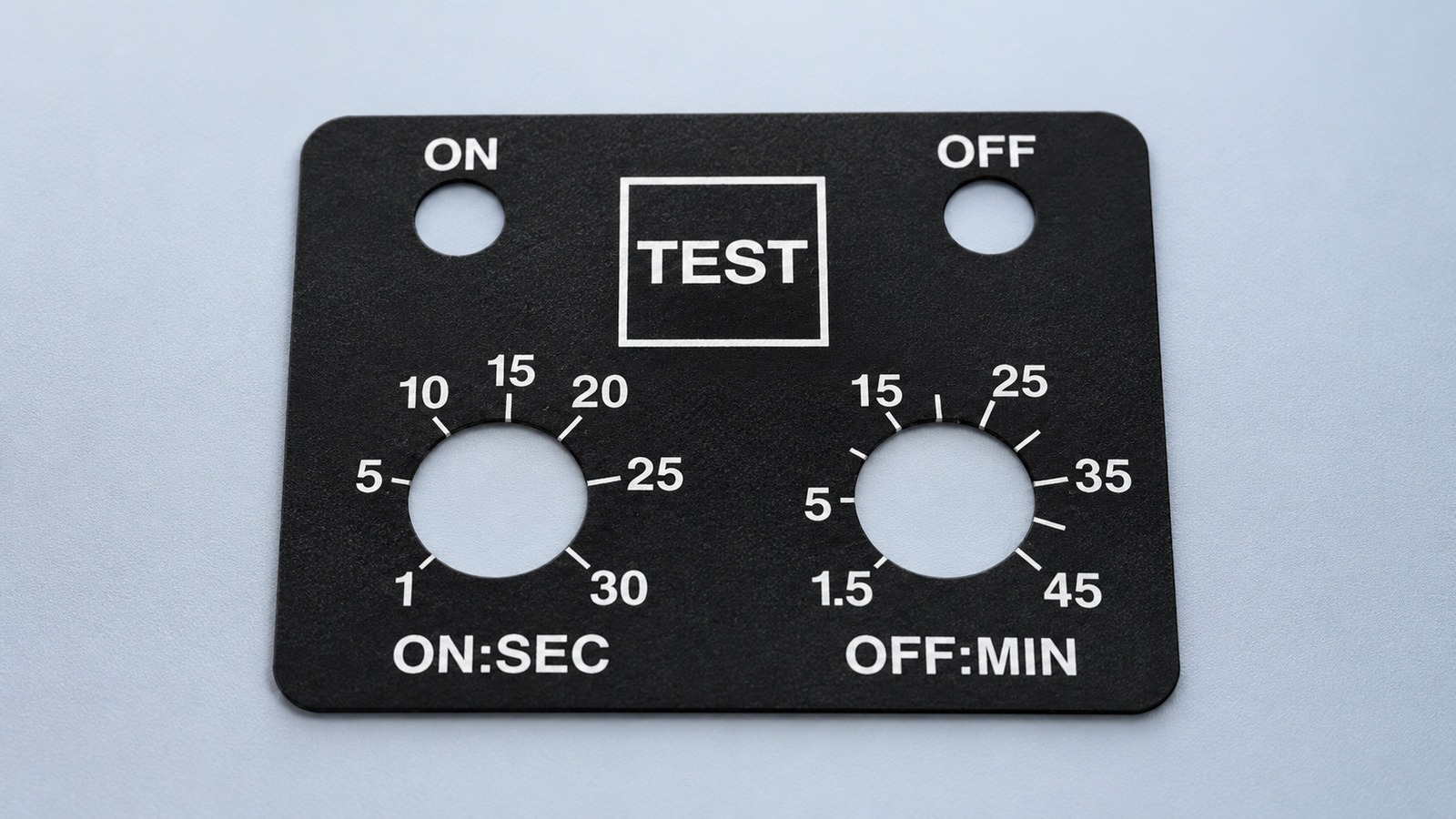
Protection is built into the construction. Our labels are reverse printed directly onto the rear surface of the polycarbonate, so the graphics are viewed through the material. With the adhesive applied behind the print, the graphics are sandwiched between the polycarbonate and adhesive for exceptional protection from direct surface wear.
The adhesive completes the label construction and secures it to the equipment. Selection needs to account for the surface beneath it, and the conditions around it.
Painted metal, powder-coated equipment and plastic housings can need different bonding approaches. Share the substrate, surface texture, temperature range and any cleaning exposure so the label construction can be assessed for the job.
The right shape. Every detail considered.
A cutting die turns a label design into a repeatable finished shape. For industrial polycarbonate and Lexan labels, that means more than a tidy outline: the profile needs to work with the equipment, the artwork and the way the label is fitted.
From rounded corners to mounting holes and cut-outs, careful die design helps each label sit neatly in its intended position. Consistent shapes make alignment easier and give equipment a considered, professional finish.
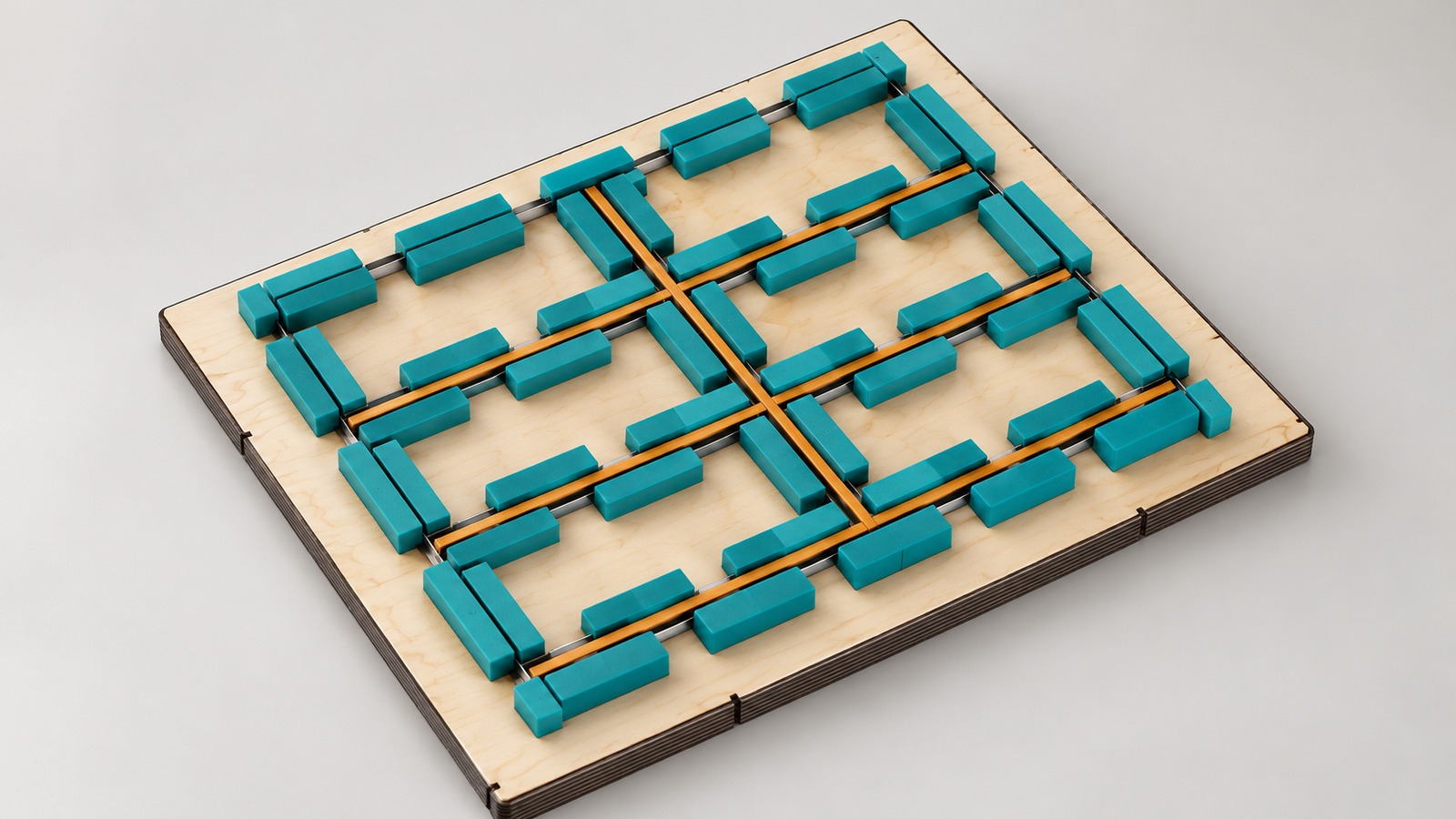
Behind the finished label: the cutting die used to produce a repeatable profile.
Precision starts with the drawing
Define the outside dimensions, corner radii, hole positions and any critical fit requirements before tooling. Agree the required tolerances for the chosen material and construction.
Print and cut, working together
Accurate print-to-cut registration keeps borders, text and graphics correctly positioned within the finished profile. Artwork needs suitable bleed and clearance around edges and openings.
Consistency across the run
A dedicated cutting die supports repeatable profiles from one label to the next. Checking the first finished samples helps confirm shape, fit and artwork alignment before the full run proceeds.
Where information meets equipment
Custom polycarbonate labels help bring consistent identification and branding to industrial products, assemblies and installations.
Machinery & equipment
Product branding, equipment identification and operating information for machine builders and engineering teams.
Controls & automation
Enclosure branding, panel legends and graphic overlays designed around your layout and fixing requirements.
Inspection & service
Service details, inspection information and QR graphics that connect physical equipment with digital records.
OEM product identification
A consistent finish across production runs, from a compact branded badge to a larger equipment label.
Industrial labels for local and European projects
Planning a polycarbonate label project in Limerick, sourcing durable industrial labels in Ireland, or specifying Lexan equipment labels for a European production programme? Start with the practical details: where the label fits, what it needs to say and how it will be used.
From engineering workshops to OEM manufacturing, a well-specified label brings material, print, shape and adhesive together in one considered component.
Good questions. Better labels.
What are polycarbonate labels used for?
Typical applications include equipment branding, machine identification, control panel graphics and service information. Their suitability depends on the chosen material grade, printing method, adhesive and operating conditions.
How does reverse printing protect the graphics?
The design is printed directly onto the rear surface of the clear polycarbonate and viewed through the front. Adhesive is applied behind the print, enclosing the graphics between the material and adhesive. The outer polycarbonate face takes the everyday handling and rubbing, helping protect the print beneath it.
Are Lexan and polycarbonate the same thing?
Lexan is a trade name for polycarbonate materials. When specifying a label, confirm the actual grade, thickness and finish rather than relying on the name alone.
Can labels include logos and QR codes?
Yes. Printed branding, text and QR graphics are all possible. Final code size, contrast and print detail should be checked with a scan test on the finished label.
Are these suitable for outdoor or chemical exposure?
This needs to be assessed for the specific construction. Share expected sunlight, moisture, temperature and cleaning agents. Outdoor life and resistance should be confirmed for the selected material, ink and adhesive combination.
How precise can die-cut polycarbonate labels be?
Required tolerances should be agreed against the label drawing, material thickness and tooling method. Highlight critical dimensions, mounting holes and cut-outs, and use finished samples to check the fit on the actual equipment.
What is needed for a quotation?
Provide dimensions, quantity, artwork, preferred finish, application surface and environmental conditions. Include any cut-outs, variable information or special fitting requirements.
Tell us what it needs to handle
Share the dimensions, quantity, application surface and working conditions, and we will advise on material, printing, die cutting and suitable industrial adhesive options.
Get In Touch